
BIOGRAPHY
Robert Trent Jones
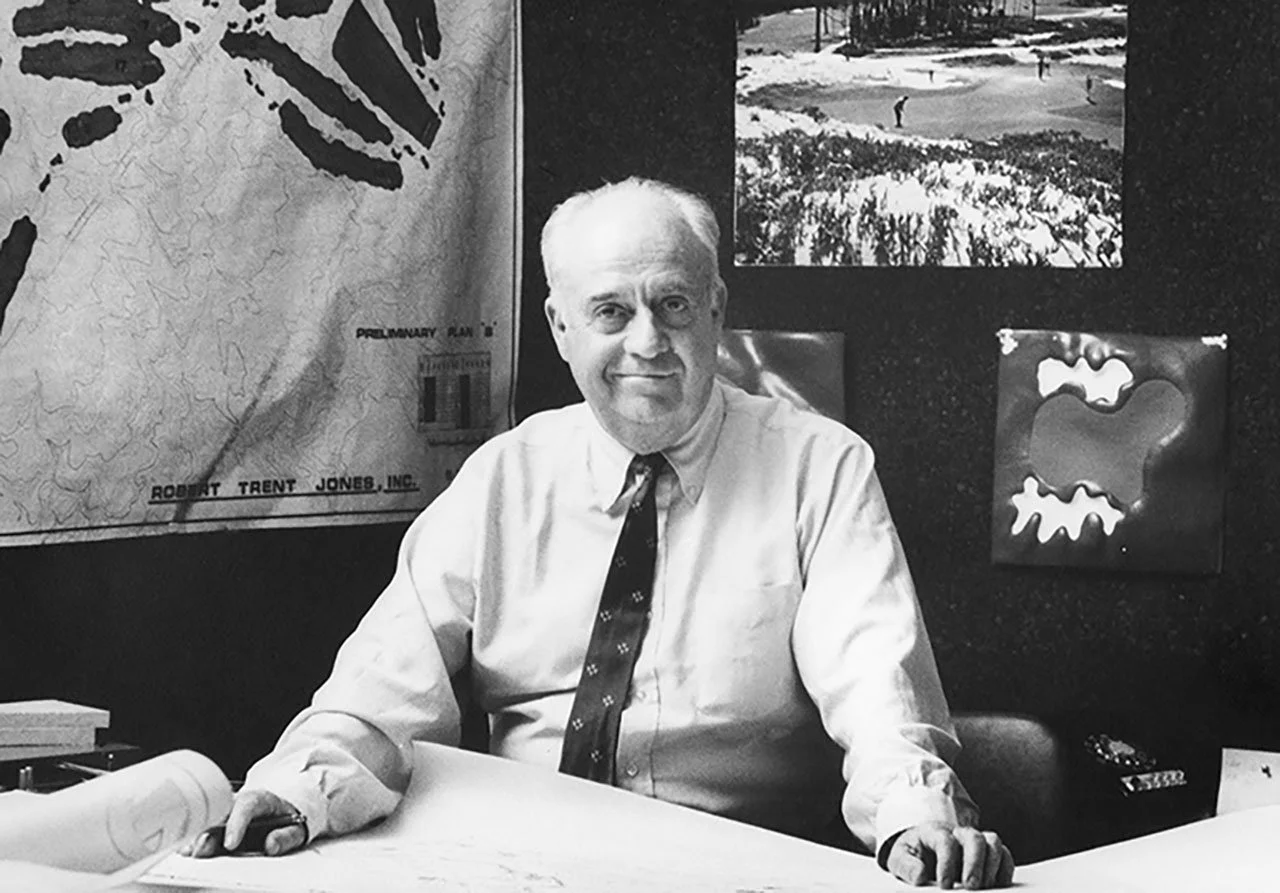
Robert Trent Jones was a towering figure in golf course architecture, renowned for shaping the modern game with his dramatic, challenging designs and “heroic” philosophy. Over a remarkable career spanning nearly 70 years, he designed or redesigned more than 400 courses across 45 US states and 35 countries, leading to the saying, “The sun never sets on a Robert Trent Jones golf course”.
Early Life and Education
Born in Ince, England, on June 20, 1906, Robert Trent Jones emigrated to the United States with his parents around age five, settling in East Rochester, New York. He developed an early love for golf while caddying at the Donald Ross designed Country Club of Rochester and became an accomplished amateur player. He even posted the best amateur score at the 1927 Canadian Open. A chronic ulcer prevented him from pursuing a professional playing career, so he pivoted his ambition toward golf course design.
Jones attended Cornell University, where he demonstrated his innovative spirit by creating his own specialized, self-designed curriculum focused on golf course architecture, combining studies in landscape architecture, agronomy, hydraulics, and surveying. As a student, he gained practical experience by designing the back nine holes of the university’s golf course – now called ‘The Robert Trent Jones Golf Course at Cornell University’.
“Robert Trent Jones did not invent golf course architecture, it only seems that way.”
– Ron Whitten, Golf Digest
The Birth of “Trent” and Rise to Prominence
After graduating from Cornell, Jones formed a brief partnership with Canadian architect Stanley Thompson before starting his own firm in the late 1930s, often utilizing Works Progress Administration (WPA) labor during the Depression to build public courses. His major breakthrough came after World War II when he collaborated with amateur legend Bobby Jones on the design of the prestigious Peachtree Golf Club in Atlanta. Despite the similarity of their names, the two men were not related. To distinguish himself from Bobby, he soon began to go by his middle name, Trent.
This association led to further high-profile work, including significant modifications to Augusta National, where he famously added the water hazard to the par-3 16th hole. Jones’ reputation soared when he remodeled Oakland Hills Country Club for the 1951 U.S. Open. The course was so demanding that winner Ben Hogan famously called it a “monster,” a comment that generated national media attention and cemented Jones’ reputation as the “U.S. Open Doctor”. He received frequent requests to “toughen” U.S. Open venues and went on to work on over half of the US Open venues between 1950 and 1970, including Baltusrol, Oak Hill, and Congressional.
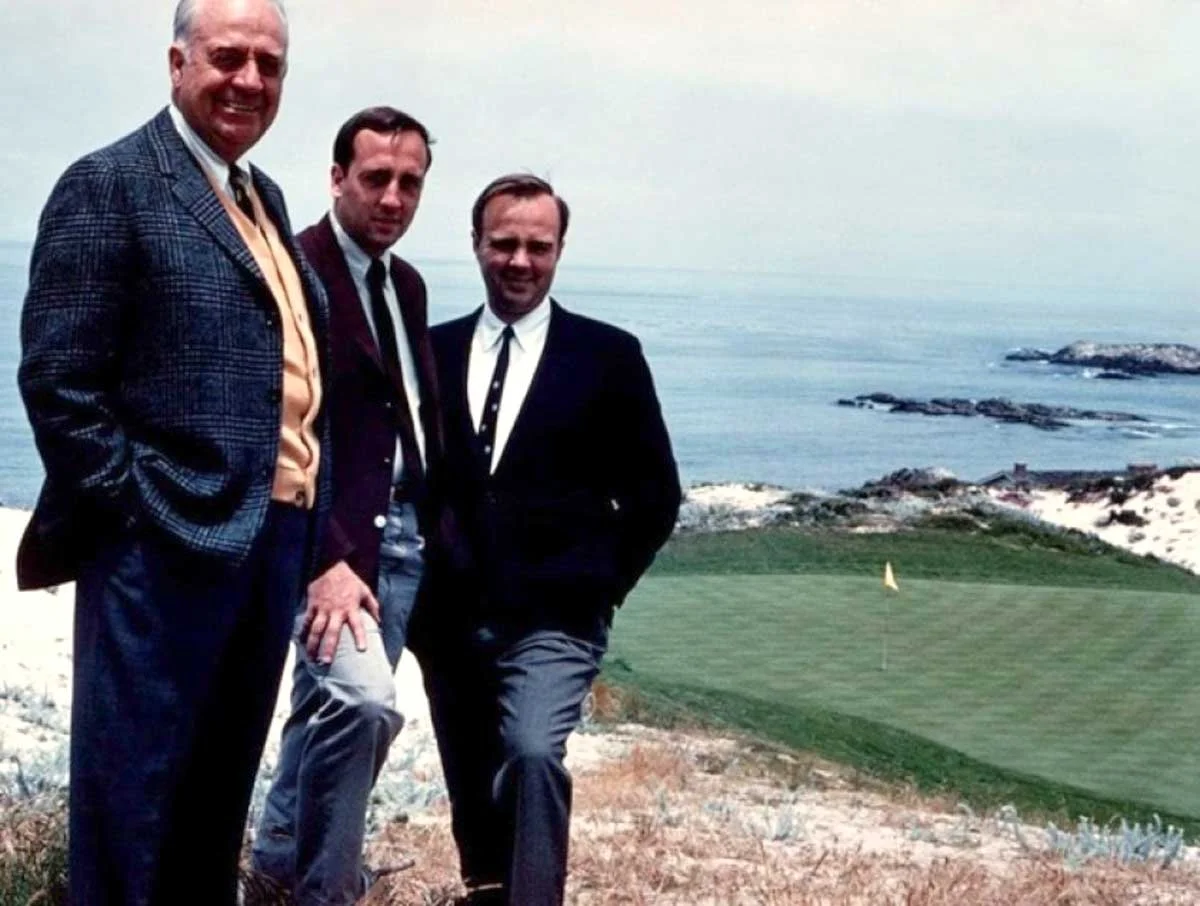

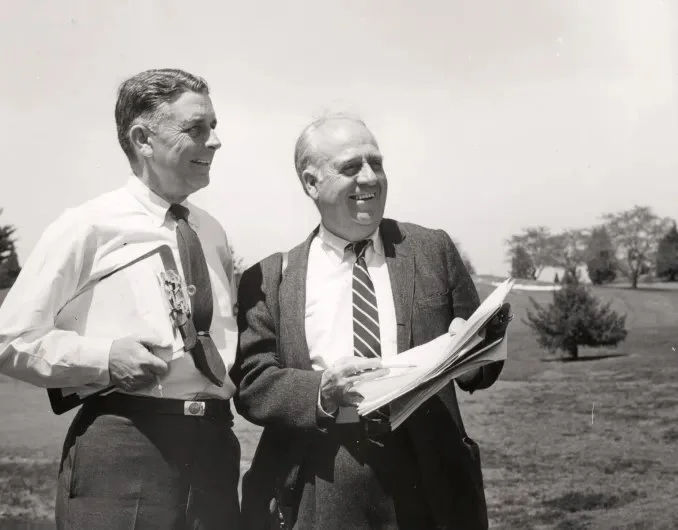
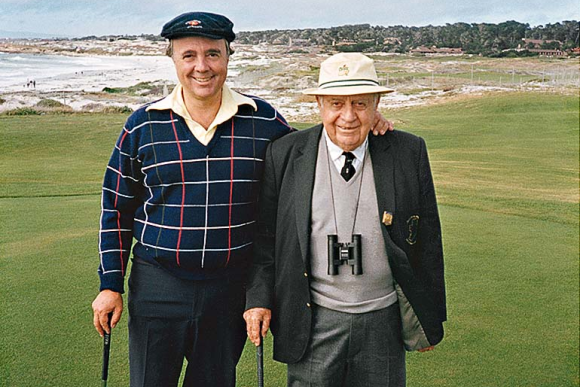
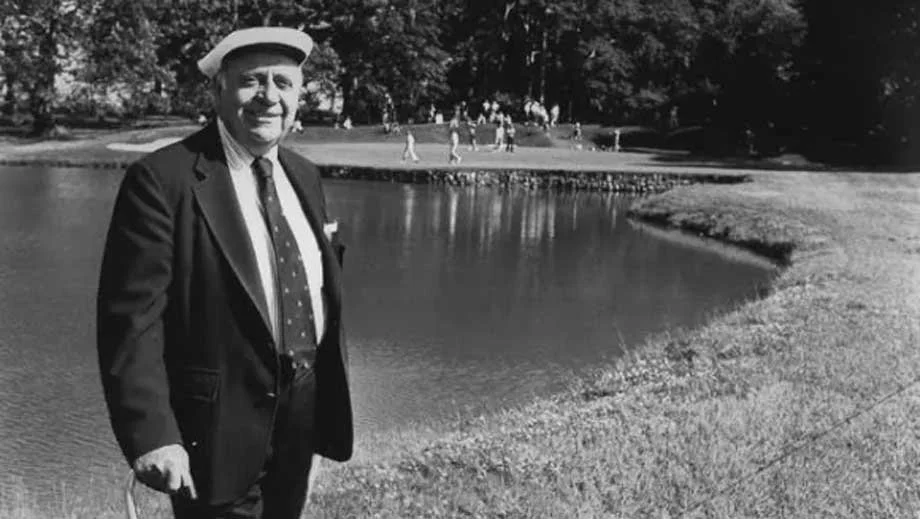

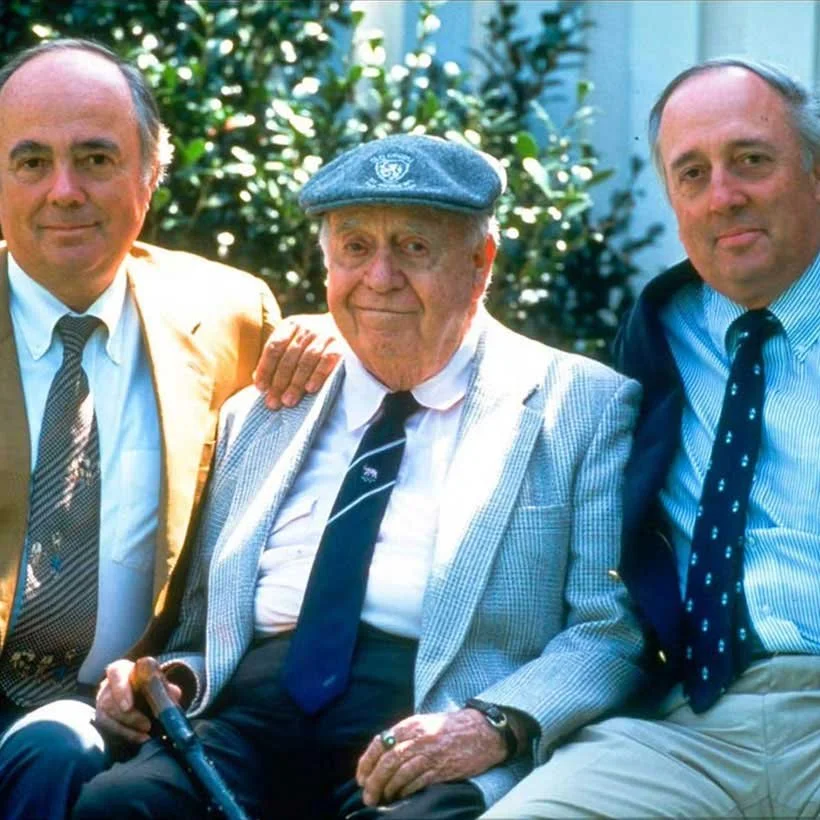
“At the peak of his fame, a commercial jetliner was as much a tool of his trade as a drafting board or a bulldozer.”
– Ron Whitten, Golf Digest
Expanding the Brand Globally
The 1960s was a period of significant global expansion for RTJ, and its said no golf architect logged more sky miles than RTJ. He designed and built dozens of courses in numerous countries around the world showcasing his innovative approach to golf course architecture and his ability to adapt designs to challenging environments while embracing the natural terrain.
RTJ entered the European market with courses like the Real Club de Golf Sotogrande in Spain (1964). There, he introduced new irrigation systems and turf grasses specifically chosen to thrive in the dry Mediterranean climate, a significant innovation at the time. This led to further projects, including one for King Hassan II in Morocco, near the African coastline.
In a groundbreaking engineering and design feat, RTJ built the Mauna Kea Golf Course on the Big Island of Hawaii (1964), transforming a rugged, ‘lava wasteland’ into a world-class course that features an iconic over-the-ocean par-3 third.
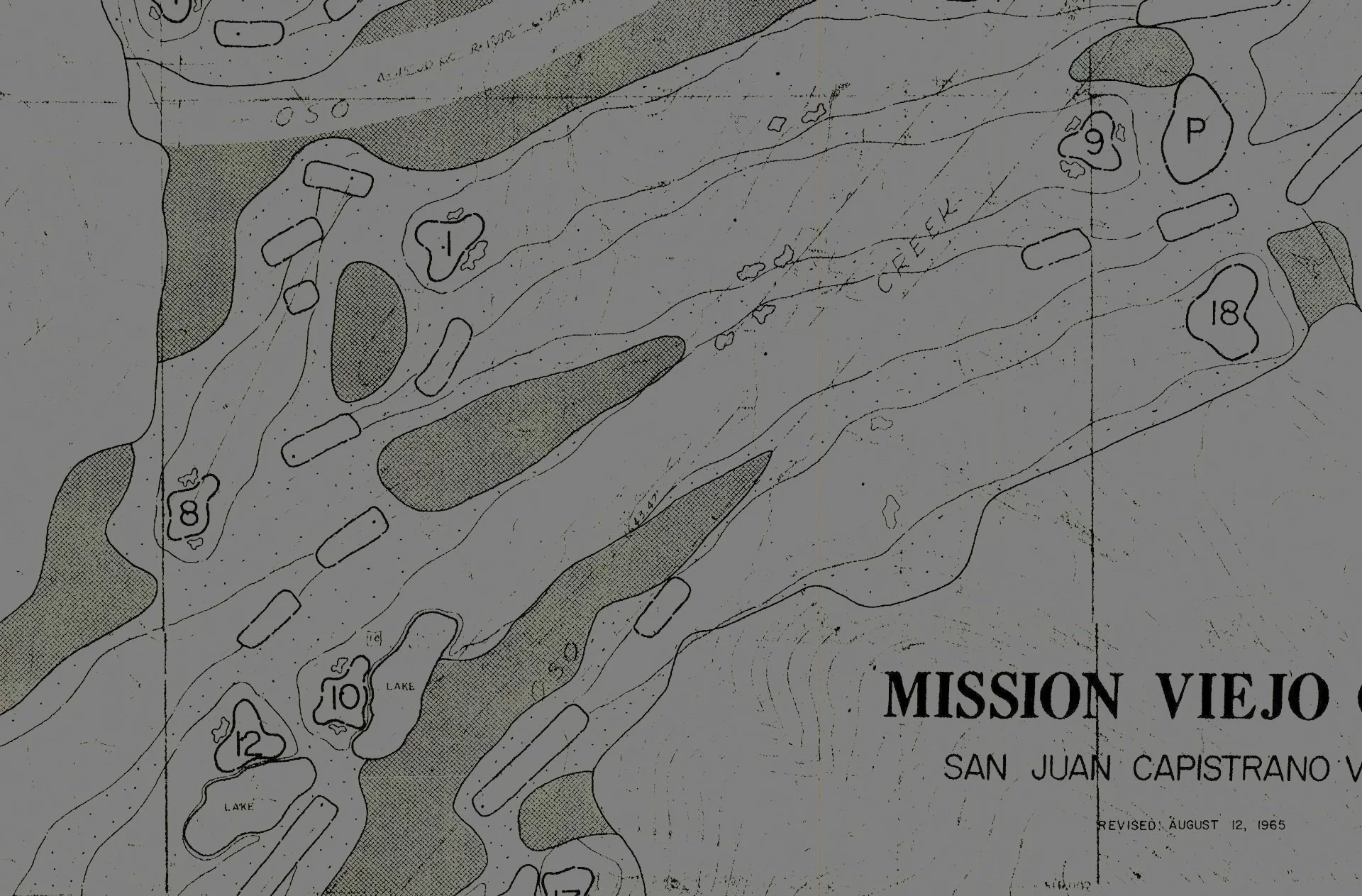
Back in California, RTJ was highly active, creating courses that would become revered classics. In Monterey, he designed the "crown jewel" of his California courses, Spyglass Hill, which opened in 1966. Known for its dramatic contrast between oceanside dunes and the dense Del Monte Forest, it is considered one of the toughest tests in golf and a long-standing U.S. Open venue. Our own beloved Mission Viejo Country Club followed soon after, officially opening in 1967 (pictured below).
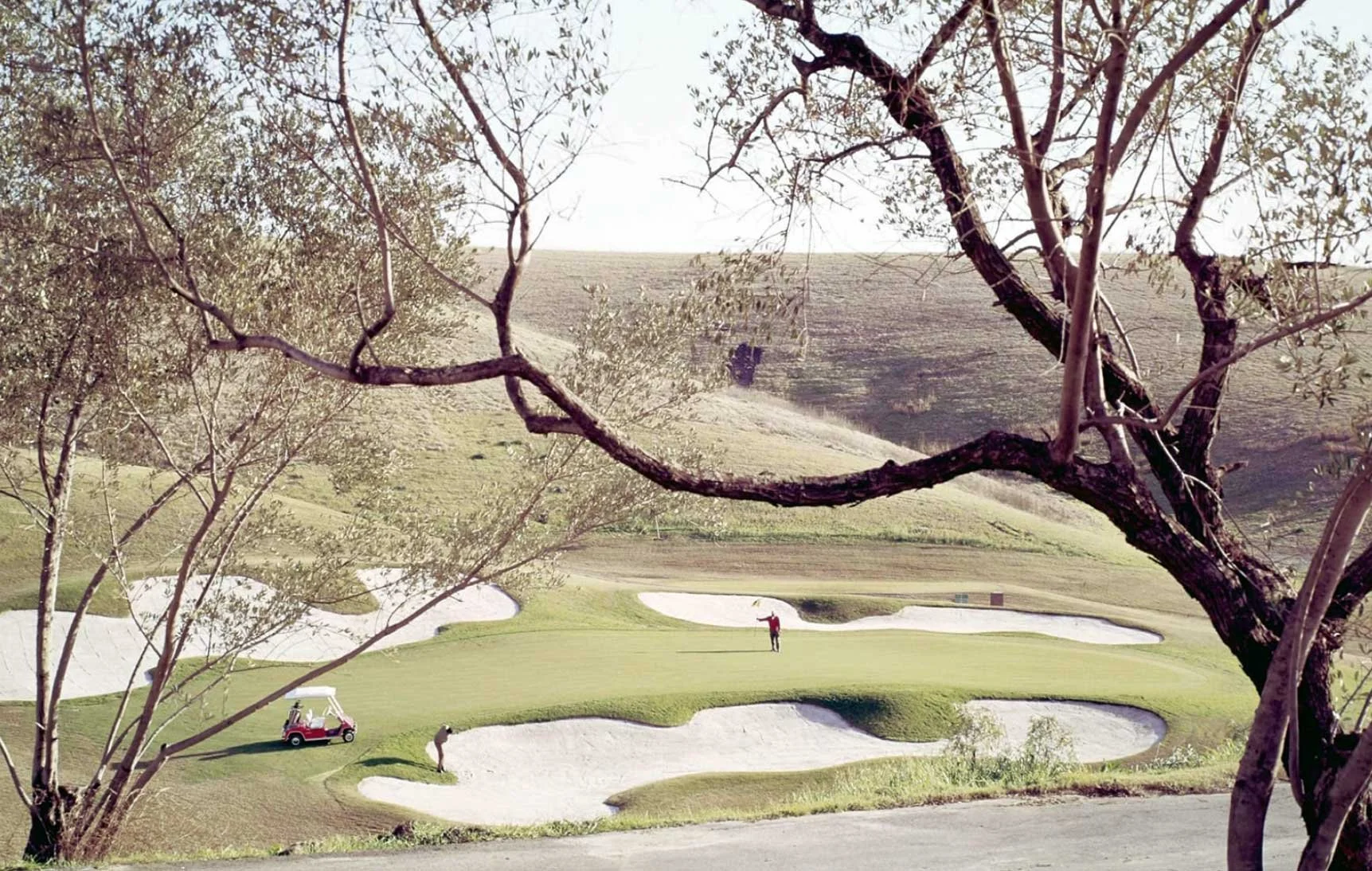
Mission Viejo Country Club 1967Design Philosophy and Legacy
Jones’ designs were known for their dramatic use of terrain, large, undulating greens, and strategic placement of hazards, particularly water and large bunkers. He championed the philosophy of “heroic golf,” which is encapsulated in his famous maxim: every hole should be a “hard par but an easy bogey”. This risk-reward approach aimed to challenge professional golfers while remaining playable for amateurs via multiple, often 100-yard-long, tee boxes.
Jones left a global footprint and was a true pioneer in his field, responsible for establishing “signature” courses with a form of branding that brought the architect into the limelight. He worked for high-profile clients including President Dwight D. Eisenhower, for whom he installed a putting green at the White House. One of his most enduring legacies is the Robert Trent Jones Golf Trail in Alabama, an ambitious collection of 26 public courses designed to boost the state’s economy through golf tourism.
Jones was a founding member and president of the American Society of Golf Course Architects (ASGCA). He was the first architect to be inducted into the World Golf Hall of Fame in 1987 and received the GCSAA’s Old Tom Morris Award that same year.
He continued working well into his nineties, with his final completed course being Southern Highlands Golf Club in 1999. Robert Trent Jones Sr. died in Fort Lauderdale, Florida, on June 14, 2000, just days shy of his 94th birthday. His legacy is continued by his sons and grandsons, Robert Trent Jones Jr. and Rees Jones, who are also highly successful golf course architects.

Biographic Timeline
-
‘Bobby’ then came with his parents to the United States at the age of five. They settled in East Rochester, New York.
-
RTJ breaks the course record at Genesee Valley Park shooting a 69. An ulcer keeps him from pursuing competitive golf but he becomes the professional at Sodus Bay Heights Club at age 19 where he met Gene Sarazen who becomes a lifelong friend.
-
Jones designed his own course of study to become a professional golf course architect and designed the back-nine of Cornell’s golf course, on what would become Cornell’s Robert Trent Jones Golf Course.
-
Jones meets his future wife, Tefft Davis, while attending a frat party at Cornell. They would marry in 1934.
-
Stanley Thompson was the most famous golf architect in Canada at the time - he and Jones hit it off, and formed a partnership that let Jones learn from the old master.
-
Jones pitches and lands projects to build public golf courses, this starts a trend toward professional designed courses for the masses that would carry through the post WWII boom.
-
With an established design philosophy and a growing list of clients Jones essentially creates the business of golf course design.
-
The two become friends and lifelong collaborators designing Peachtree Golf Club together. RTJ takes on the middle name ‘Trent’ to distinguish himself from the immortal golfer.
-
The Association of Golf Course Architects (AGCA) is founded with Jones as its youngest charter member. RTJ helps draft its constitution, by-laws and code of ethics.
-
RTJ reimagines the par three 16th by damming Rae’s Creek and lengthening the hole and his design changes to #11 both became a big part of Augusta’s magic in the new age of television.
-
After the death of Donald Ross, Jones offered his services to update Oakland Hills, where he scrapped Ross’ plans and created a monster course, conquered by none other than Ben Hogan in the 1951 Open.
-
In defense of his redesign of the par three 4th hole, Jones gets a hold in one and says “Gentlemen, I think this hole is eminently fair.” And to this day its considered one of the best par 3’s in the US.
-
Jo teamed up with Laurence Rockefeller to create Dorado Beach, their firendship allows RTJ to build resort courses at premier sites around the world.
-
Courses included Point O’ Woods, Old Warson, Bellerive, Duke University and Otter Creek.
-
With a master plan community near Costa del Sol, he built the epic Sotogrande. Valderama would soon follow, and would become one of the premier venues in Europe eventually hosting the Ryder Cup in 1997.
RTJ finalizes plans for Mission Viejo Golf Course. -
Jones builds Mauna Kea for Rockefeller on a lava field. Back on the mainland he creates Spyglass Hill in Monterrey. A perennial Top 10 public access course alongside Pebble Beach.
-
‘Mission Impossible’ was built on a Spanish land grant for the Mission Viejo Company.
-
RTJ builds 45 holes near the African coastline in Morocco.
-
In response to Alan Shepard hitting a six iron on the moon, Walter Cronkite tells his CBS audience “Soon, we’ll have a Robert Trent Jones golf course on the moon for Al to play.”
-
Extending the Jones legacy with such gems as Cascata, Poppy Hills, Chambers Bay and numerous RTJ Sr. redesigns. Both would become president of the SCGA and receives accolades in their own right.
-
The first living architect to be honored. He joined Donald Ross as the only two architects inducted.
-
RTJ worked with Roger Rulewich and the state of Alabama to create the largest golf construction project ever. Now boasting 26 courses, the ‘Trail’ provides a huge economic boost for Alabama and revolutionizes golf tourism again.
-
Mr. Jones dies peacefully in Ft Lauderdale, FL after completing his final course design, Southern Highlands in Las Vegas with son Bobby.
Sources: Robert Trent Jones Society, Mission Viejo Country Club Archives